

1. What is your purpose of life?
2. Why are you teaching?
3. What is your passion?
4. How well do you understand young people? Do you remember what it was like to be young?
5. When you see a young person happy, sad, or unsure, do you know what to do?
6. Can you embrace cultural diversity? Can you empathize with parents’ concerns?
7. Can you embrace uncertainty?
8. What have you recently learned?
9. Do you think schools in the future will be the same as today?
If you meet us during our overseas recruitment tour at the LSE on January 19, Oxford on January 21, UC Berkeley on February 3, Stanford on February 4, Harvard on February 5, Columbia on February 7, or HKU on February 24, you might want to think about how to answer those questions.
If you are curious or even excited about them, you are the teacher we are looking for at HD/HT Schools.
Q1-3 are about higher purpose and passion for education; Q4-6 are about judgment and compassion; Q7-9 are about insights into the future and growth mindset.
Most of us have experienced the traditional education of the 20th century and are now working hard to bring the essential 4C skills of the 21st century into today’s classrooms. However, each student we face will live into the 22nd century.
Today’s education is
a dialogue spanning 3 centuries.
What are the underlying values of schools?
3000 years ago, schools were invented in China; 2000 years ago, the classroom model was established in the Western world. Yet from ancient Chinese private tutoring to modern universities, schools have not fundamentally changed for thousands of years.
In the age of AI, the personalized learning advocated by Confucius and the “midwifery” teaching of Socrates will become handy for every student. At the end of 2024, Arizona approved the “Unbound Academy,” where the basic courses are all taught by AI. Human mentors are responsible for storytelling, public speaking, problem-solving, and other life skills.
In other words, schools must go beyond the instrumental level and build the “underlying values” of life for students. As Chris Edward, the Chief Academic Director, said, “In the future, no teacher will be able to compete with technology. But for now, in meeting basic human needs, building relationships, creating a positive learning atmosphere, and improving human conditions through critical thinking, technology is still far behind human teachers.”
What is the difference between
a “GREAT” teacher and a “GOOD” teacher?
Our answer is –
A mediocre teacher TELLS
An average teacher EXPLAINS
A good teacher DEMONSTRATES
A great teacher INSPIRES
“In the future, knowledge may come from computers and books, but inspiration will still come from teachers.” — Chris Edwards, Chief Academic Director of EliteK12 Group
A great teacher must:
Love learning and enjoy being with children, bringing the above two things together into their classroom. We hope your classroom, as Mr. Li Zhenchun, the Chief Academic Director of EliteK12 Group put, is a “mutually beneficial, mutually fulfilling, and supportive eco-system.”
Inspire creativity. Asking questions is more important than memorizing answers. We expect you to inspire students to ask, to enlighten and expand the boundaries of each life like Confucius and Socrates, and ultimately help children discover their uniqueness and unleash their potential.
Respect diversity, empathize with young people and parents. No matter how technology iterates, the essence of education is still to foster specific relationships with specific people. We expect you to become a leader of a mini learning community, to challenge education to go deeper, and to form consensus in communication with parents and students.
Embrace change with a growth mindset. We hope you can make good use of AI or more advanced technology, to provide personalized education for students. Then when students face a complex future world, they can be as calm and confident as you are today.
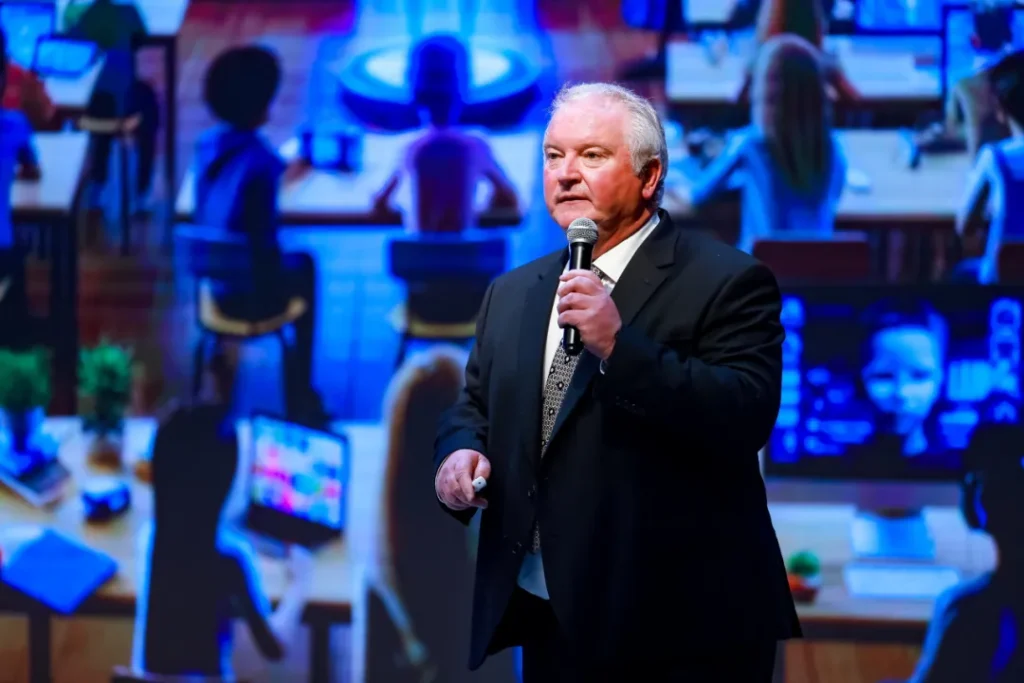
This is the “great teacher” we are looking for.
Even if you are not one today, but aspire to be one, welcome to grow with us.