

What starts as a small campus issue has led a group of children to drive tangible change through thoughtful design and hands-on action. Yishan Kids brings an exclusive interview with the winners of the 2050 Youth Impact Challenge, hosted by the HD Foundation. Some of these young changemakers took their first step beside a food waste bin, cutting hundreds of kilograms of waste through a “clean plate” campaign; some turned fruit peels into compost, giving new life to campus trash; others developed a dedicated app for patients with rare diseases, or took to the streets to popularize sex education. From campus to the wider community, these young changemakers are responding to the problems around them in their own way.
Starting With Campus Food Waste Bins
At lunchtime, the cafeteria of HD Beijing School in Chaoyang District is bustling with activity. Children come in one after another for their meals, and after finishing, they pour leftover food into the food waste bins, set their trays aside, and head back to the classroom to prepare for afternoon classes. But fourth graders Liu Muxi and Xing Yiduo don’t rush to leave. They stand quietly to the side, watching six food waste bins gradually fill up, each loaded with around 60 centimeters of food scraps.
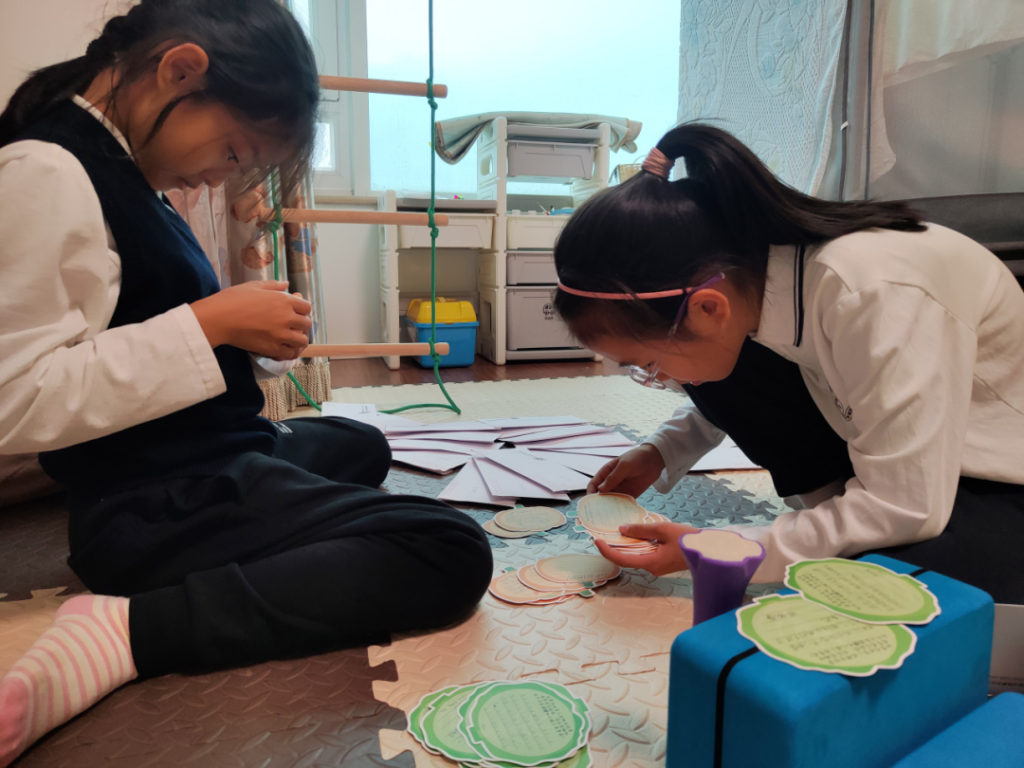
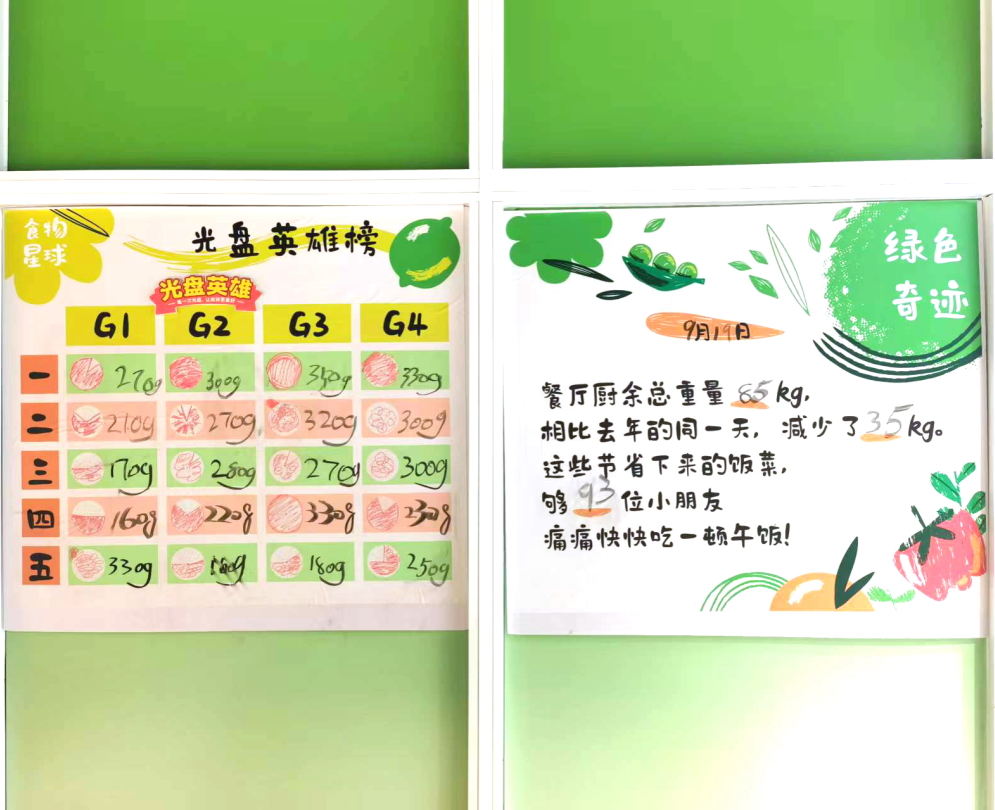
A deep sense of regret over the wasted food welled up inside them. Liu Muxi and Xing Yiduo decided to take action to reduce food waste on campus, naming their initiative the War on Food Waste. At first, they came up with the idea of launching a “Clean Plate Leaderboard”: every day, they weighed the food waste from each grade in the school and displayed the data in the cafeteria. What they found exceeded their worst expectations: the average food waste per student from a single grade in one lunch could reach as high as 480 grams. The concrete numbers hit home hard. Waste was no longer just a concept in a textbook, but had a real, tangible weight.
They reached out to the school principal, and spread the word about their public welfare initiative by playing videos and putting up posters around the campus. They also interviewed 18 fellow students, inviting them to share their efforts to finish all the food on their plates. Some talked about eating as much as they could and getting more exercise, while others said that after learning about the campaign, they would try dishes they didn’t like in the future.
In the end, Liu Muxi and Xing Yiduo’s War on Food Waste helped students from Grade 1 to Grade 4 cut a total of 741 kilograms of food waste in just a month and a half – the equivalent of saving 2,470 student lunches. In the following month and a half, the cafeteria saw an even greater reduction in food waste, totaling 1,049 kilograms.
Food waste on campus also caught the attention of Yin Shuchen, Liu Yuxi, and Qiao Yun’an. In their eyes, “nothing deserves to be wasted” – trash is just a resource misplaced. They hoped to find a way to turn food waste into useful nutrients, so they set out to learn about composting and launched the Turning Food Scraps into Gold project.
Composting requires a great deal of specialized knowledge. After their first attempt failed, the three quickly adjusted their method and achieved success by using enzyme composting. Little by little, they brought compost bins and foam boxes into the school to put their composting skills into practice on campus. On one occasion, they found that the enzymes in the compost bin had attracted worms. After comprehensive consideration, they concluded the problem was likely caused by sandwich scraps in the bin. With the help of their science teacher, they decided to stop adding cooked food to the bins and began applying the carbon-nitrogen ratio to their composting process. They also consulted Dr. Shi Yan, a leading domestic composting expert and founder of Shared Harvest Farm, who advised them that black soldier flies could be used to directly break down food waste.
Yin Shuchen, Liu Yuxi, and Qiao Yun’an set up a dedicated food waste bin for composting in the cafeteria, inviting students to put uneaten salad and leftover fruit peels into it. At first, students accidentally threw in other food scraps like noodles, vermicelli, and rice, forcing the team members to sort through the bin themselves to ensure only clean fruit and vegetable peels were used for composting. Over time, as more and more students saw the results of their composting efforts, more people learned about the composting rules and joined in, and the number of misplaced items dropped significantly.
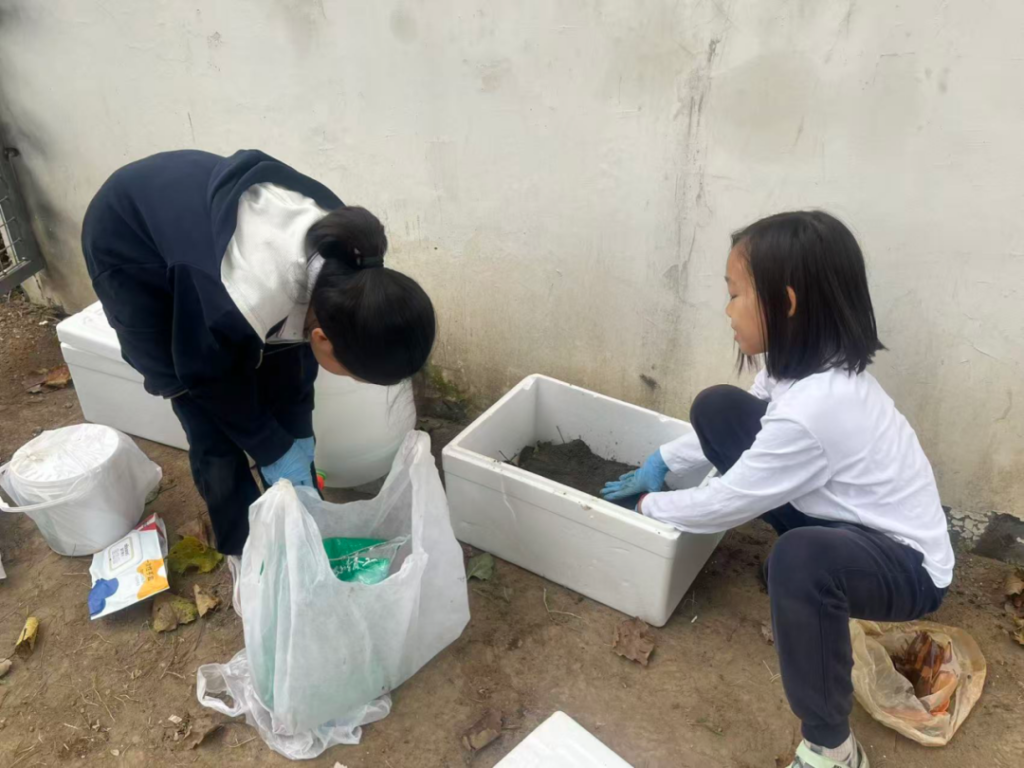
The “Turning Food Scraps into Gold” team promotes the project in the cafeteria and conducts composting experiments on campus.
Both the War on Food Waste and the Turning Food Scraps into Gold projects started with identifying a problem that needed solving in campus life, then designed creative solutions and took action to address it. Similar initiatives have been launched by many more student teams and groups. In the first 2050 Youth Impact Challenge, more than 200 children launched 96 distinct projects addressing a wide range of social issues. Some focused on patients with Henoch-Schönlein Purpura (HSP) and developed a dedicated online communication app for them; some focused on sexual protection and sexual assault prevention education for teenage girls and young female children, stepping outside the campus to raise public awareness of the issue through multiple channels. What they all have in common is that they start with the issues around them, spread the idea of kindness, and hope to make life better and better for themselves and the people around them.
My Plight, Our Shared Struggle
Khloe, an 11th grader at HD Ningbo School, lives with Henoch-Schönlein Purpura. This condition mostly affects children, and is characterized by recurrent episodes, strict dietary restrictions, and significant psychological distress. After diagnosis, many patients and their parents are immediately overwhelmed with anxiety: What can I eat? Will it come back? How do I explain this to my classmates? Previously, every time Khloe had a flare-up, her parents helped her keep track of her symptoms. For each doctor’s visit, they had to scroll through photo albums or chat logs to find details of her last episode. She realized there was no convenient, user-friendly tool online to help HSP patients track their condition.
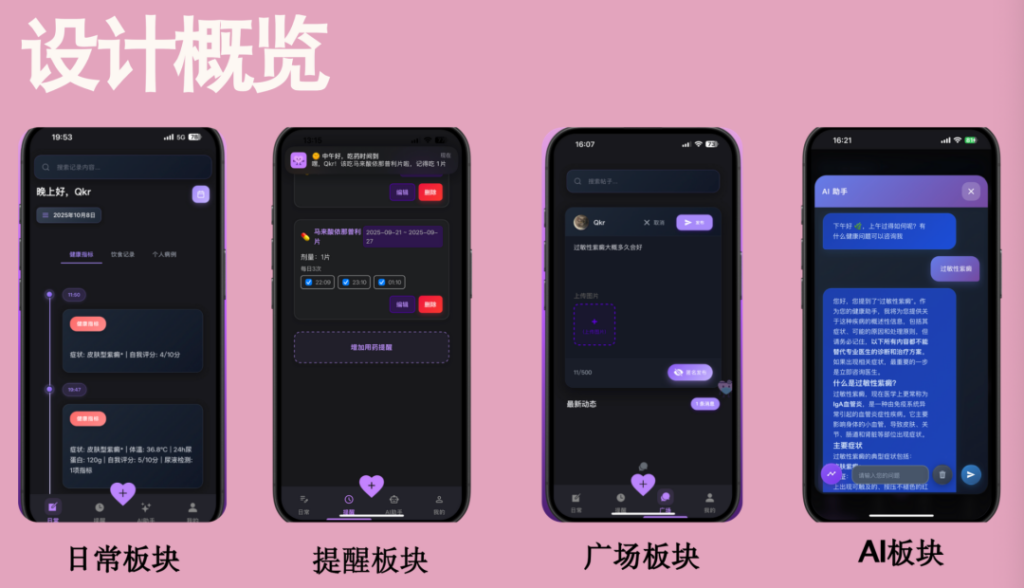
In addition, communication among HSP patients is scattered across different websites and WeChat groups, with severely fragmented information that is hard to verify for authenticity. So Khloe set out to create an app to help patients facing the same struggles. She teamed up with Jackson, a classmate interested in programming, and together they developed an app called Purpura Fairy.

For Jackson, he had long wanted to use his programming skills to develop an app of his own. Working with Khloe, he gradually learned the stories of the HSP patient community. Together, they mapped out the core functions of the app: daily symptom tracking, flare-up reminders, a community forum, and an AI advice section. During the summer vacation, he spent nearly half of every day working on the app’s development. In the end, they not only completed the app’s design and development, but also finished its ICP filing, officially launching Purpura Fairy for wider use.
To date, Purpura Fairy has over 100 active real users. After its introduction was posted on Xiaohongshu, it gained around 17,000 views. Built from personal experience, the design carries genuine warmth and empathy.
Another team addressing social issues through design is the Hear Her Voice project, founded by Wang Yue and Wang Haoyu. The two had long held a deep interest in feminist topics. Wang Yue had watched speeches by Shiori Ito and read reports about the Nth Room Case in South Korea online. A class project brought the two together as a team, and they began an in-depth study of sexual protection and sexual assault prevention education for teenage girls and young female children.
They came across a 2024 UNICEF report stating that at least 370 million girls worldwide have experienced sexual violence or rape before the age of 18. In China, according to 2023 statistics from the Beijing Zhongyi Public Welfare Foundation, 90.97% of victims in child sexual assault cases are girls, with 70.22% of victims being children under the age of 14. These numbers made them acutely aware of the severe lack of sexual safety education for underage girls.
To share the information they had gathered, they began creating various types of promotional materials, such as the “Four-Step Method for Responding to Sexual Assault”. By clearly laying out pathways for help, protection was no longer just a slogan, but a concrete, actionable plan. Their efforts turned a topic often stigmatized and silenced by social pressure into a public issue that can be discussed, learned about, and acted on.
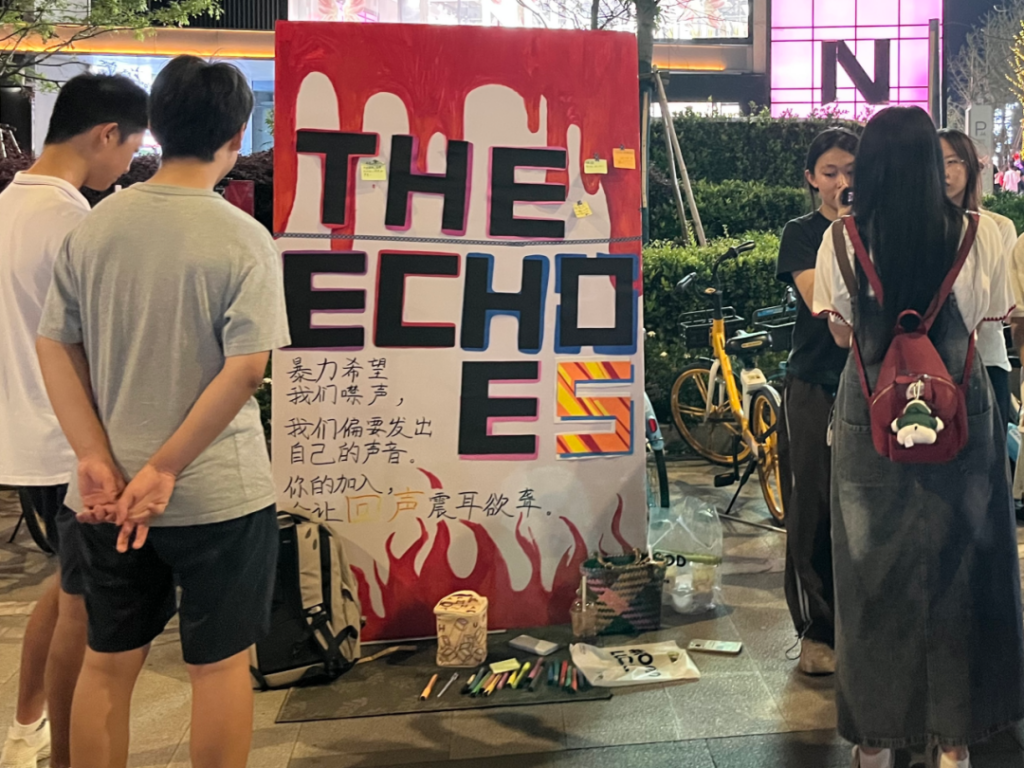
Together with their classmates, they also stepped outside the school and took to the streets to promote their cause, inviting the public to leave messages and share their thoughts. At first, they were unfamiliar with the rules for venue registration and were turned away; they quickly adapted, moving their promotion to public walkways to continue their work. Initially, passersby reacted indifferently to their campaign, with few willing to stop and learn more. So they gradually adjusted their promotional content, for example, designing a lottery box with questions, inviting passersby to randomly draw a ball printed with different sex education-related questions, spreading knowledge through interactive and fun activities.
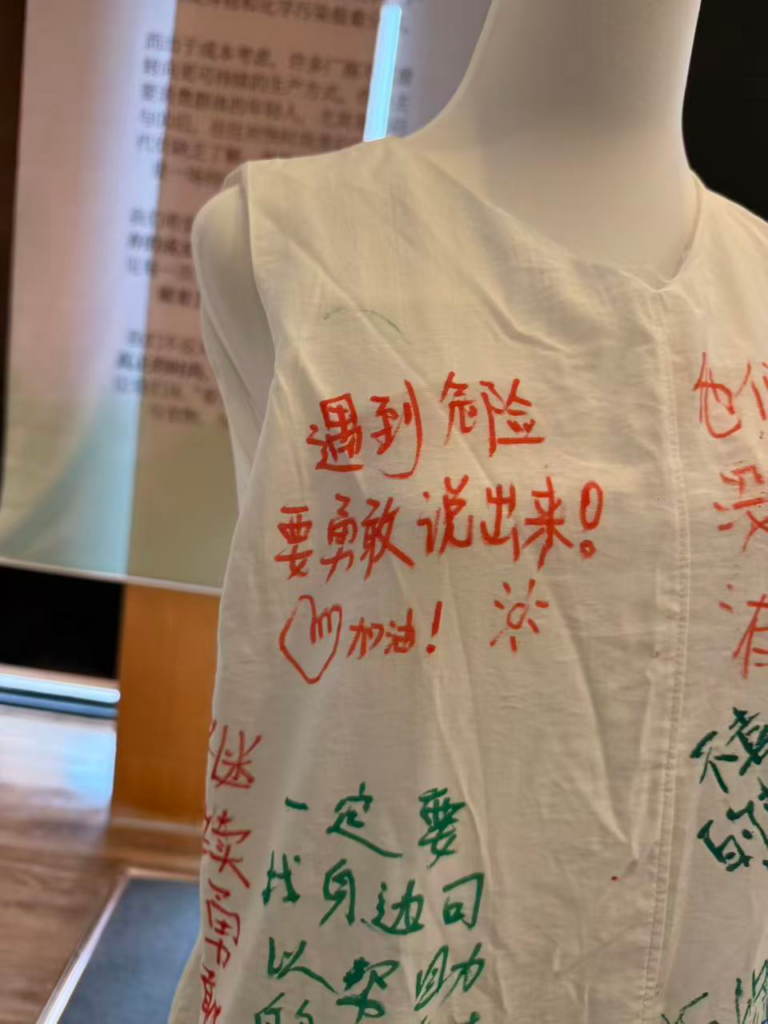
They displayed two white dresses at the event, inviting passersby to write messages on them in response to the prompt: “If this were the dress of a sexual assault survivor, what would you want to say to her?” One participant wrote on the back of the dress: “Your sisters are right here behind you.” This line has stayed with Wang Yue, and still moves her every time she thinks of it.
Action to Amplify Unheard Voices
While the 2050 Youth Impact Challenge has come to an end, this is by no means the end of these projects. For these students, the real challenge begins with figuring out how to sustain their work.
Liu Muxi and Xing Yiduo, founders of the War on Food Waste, continue to promote the concept of food saving in their daily lives, hoping to expand the clean plate campaign to more campuses. They also plan to work with the school cafeteria to reduce food purchases in the next semester. “We want to donate the money saved to children in mountainous areas, so they can also have a full lunch.”
For the Turning Food Scraps into Gold team, the project’s future development is no longer limited to the compost bins in a corner of the campus. They are trying to build connections with community resources. After visiting an organic farm not far from their school, Yin Shuchen, Liu Yuxi, and Qiao Yun’an found that the farm spends a considerable amount of money buying sheep manure, horse manure, and other fertilizers to improve soil quality. The farm was happy to accept the finished compost from their campus project, as it would not only cut costs but also be more environmentally friendly – on the condition that their composting practice can deliver consistent, high-quality results over time.
This opened up a new possibility for them: if campus composting can form a stable, replicable technical process, it can not only handle the school’s food waste, but also form a partnership with farms, becoming a genuine part of the land’s circular ecosystem.
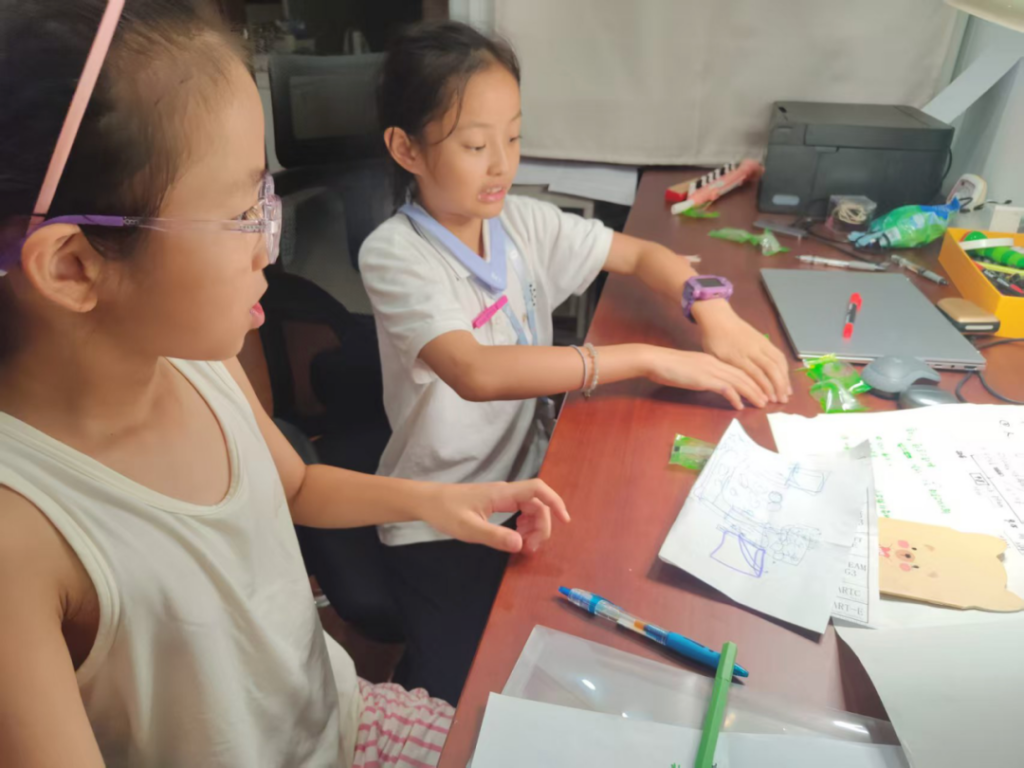
Members of the “Turning Food Scraps into Gold” team communicate with external partners.
Purpura Fairy also faces growing pains. Server maintenance and feature updates require funding, while content management and promotion demand ongoing time investment. Jackson checks the app’s backend and operational status every day. The prize money from the challenge helped Khloe and Jackson cover the first year’s server fees and development costs. Now, they are grappling with more practical questions: How to operate the app long-term? How to keep the product updated while staying true to their original public welfare mission?
In the future, they hope to iterate the app to be smarter, more professional, and more user-friendly, and to launch an official website alongside it. Khloe also plans to promote the app through online social media platforms and offline popular science lectures, to reach and help more HSP patients.
The development direction of Hear Her Voice leans more toward formal organization and legacy. Wang Yue and Wang Haoyu plan to recruit students at their school who also care about feminist issues, hoping that the project will continue to be promoted on campus even after they graduate. They also plan to regularly update content on social platforms, including sexual assault prevention education, book and film recommendations, and analysis of women’s safety cases. They also have plans to deliver sex education courses in different schools.
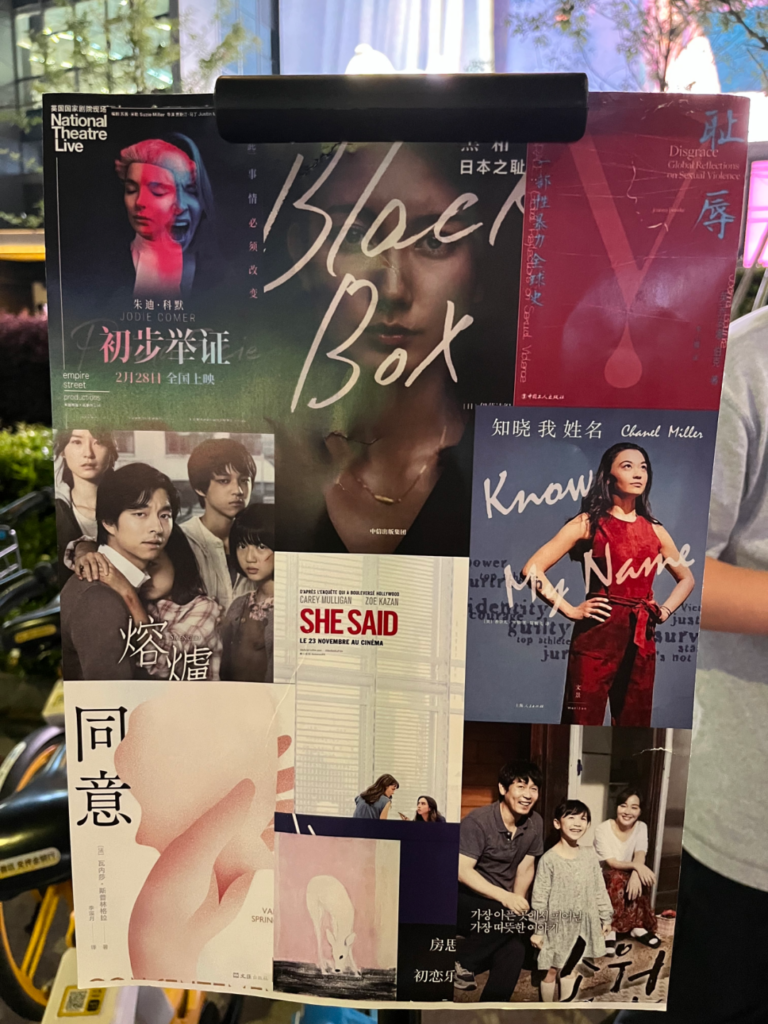
Hear Her Voice Campus Exhibition
Members of Hear Her Voice edited over 50 GB of footage from their previous events into a video, which was posted online and gained over 10,000 views on Xiaohongshu and 60,000 to 70,000 views on Bilibili. In the future, they also want to create an original feminist song and release it online, continuing to spread female strength through art.
If their initial action was about “making the problem seen”, their future goal is to build a more comprehensive mechanism to continuously solve the problem. When students begin to think about “how to sustain” their work, that is when design truly enters the realm of social practice. The actions of these young people are like vibrant seeds, slowly taking root and growing in the soil of reality, weathering the challenges of the real world, and eventually growing into one-of-a-kind trees.